In 2021, the NCAA's landmark N.I.L. (Name, Image, and Likeness) ruling changed college sports forever. For the first time in the organization's history, college athletes could legally profit from their personal brand, through sponsorships, merchandise deals, and licensing agreements. It was a seismic cultural shift that opened a door millions of fans didn't yet know existed.
But while the ruling created opportunity for a select few athletes with strong social media followings or marketable stories, it left the vast majority untouched. The mechanisms for fan support were still primitive: buying a jersey, attending a game, or watching on TV. There was no direct way for a fan watching a Saturday blowout to say, "That was incredible, and I want to show it."
Meanwhile, a generation of sports fans had grown up on platforms like Twitch, where tipping content creators mid-stream was second nature. Live community participation, hype moments, and monetary appreciation had become a normal, even expected part of experiencing something together online. The question was forming itself: what would Twitch look like for college football?
"I want these kids to have something waiting for them when they walk off that field for the last time. Not a handout, something they earned, from the people who were watching."
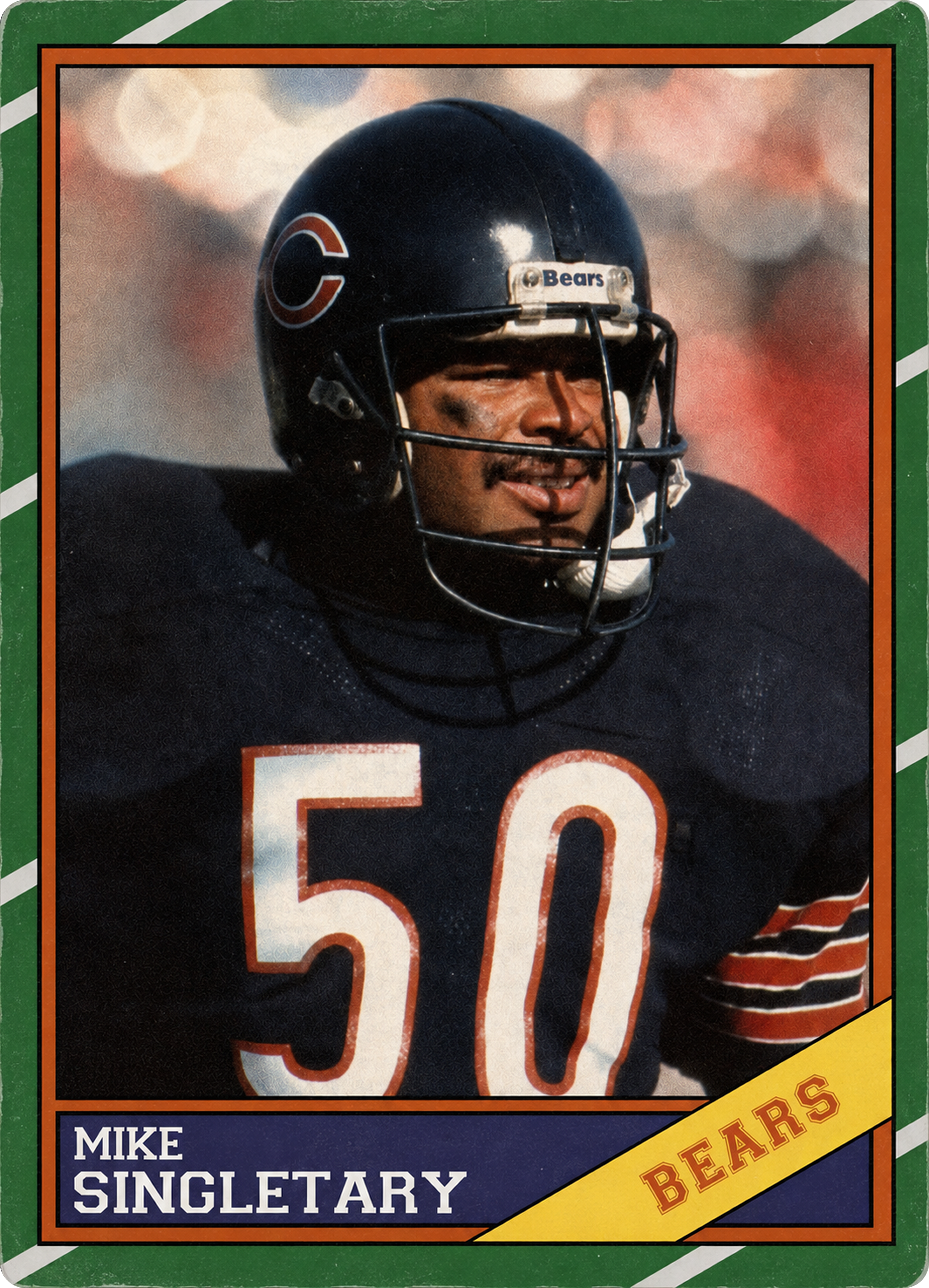
NFL Hall of Famer Mike Singletary, renowned linebacker, Super Bowl champion with the Chicago Bears, and lifelong advocate for athlete development, approached our team with this exact vision. His concept was simple in spirit, complex in execution: fans should be able to tip college athletes for great plays on the field. Those funds would not be paid out immediately (risking N.I.L. compliance issues) but held in an escrow account, giving athletes real financial stability upon graduation.
The regulatory landscape made this a delicate design problem. Any platform in this space had to carefully navigate three converging concerns: N.I.L. compliance across a patchwork of state legislation, anti-gambling regulations that prohibited any suggestion of performance-based wagering, and ethical considerations around the monetization of amateur athletes.
I was brought on as the UX/Product Designer to take Mike Singletary's vision from concept to high-fidelity prototype. The platform, known simply as MVP, needed to accomplish several things simultaneously.
About that name: it started as the working title, the Minimum Viable Product every startup ships, until someone pointed out we were building an app about Most Valuable Players. A double meaning too good to replace, so it stuck.
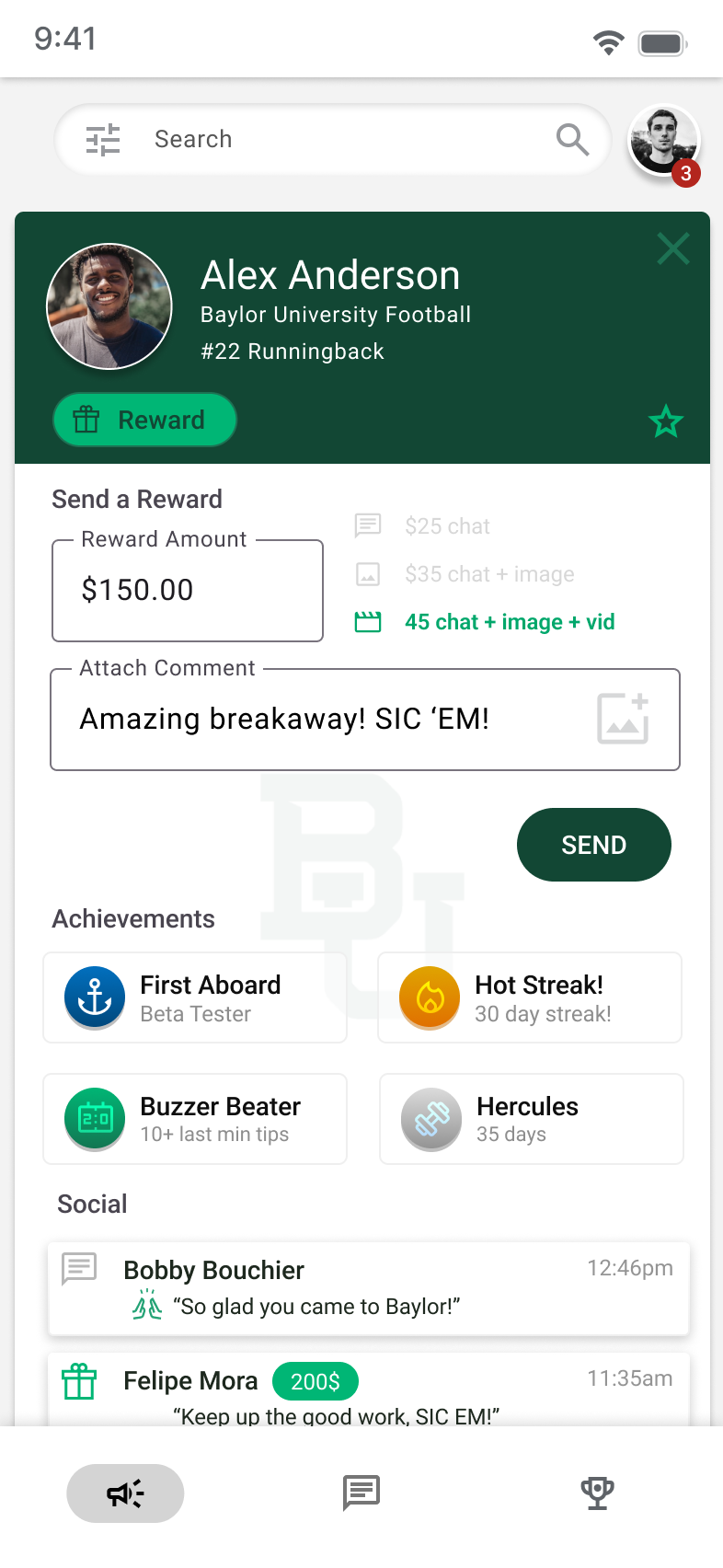
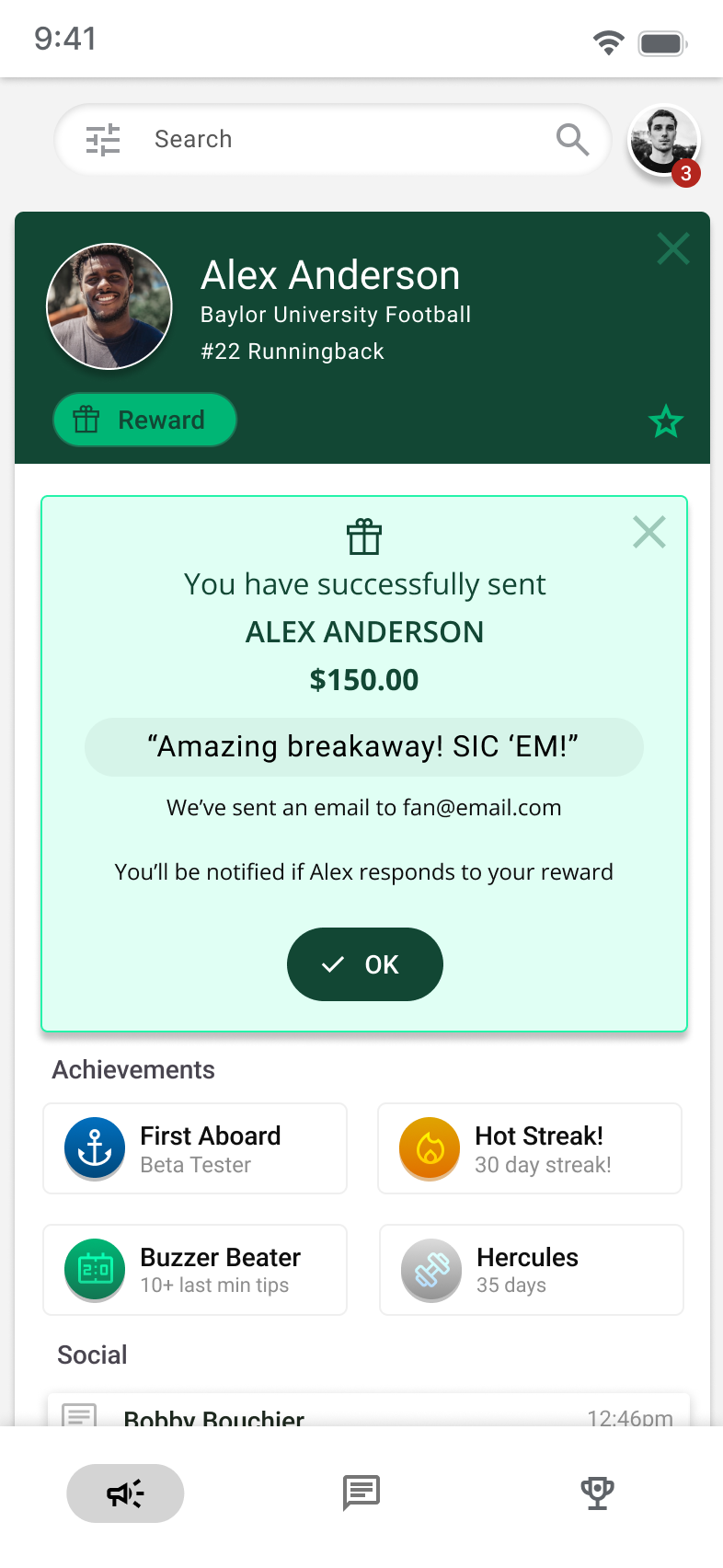
Allow fans to send micro-tips tied to specific, verified in-game moments, a touchdown, a sack, a game-winning catch. Make the act feel celebratory, not transactional.
Build trust through radical transparency. Users needed to see exactly where their money went, how it was held, and what it was designed to do for the athlete's future.
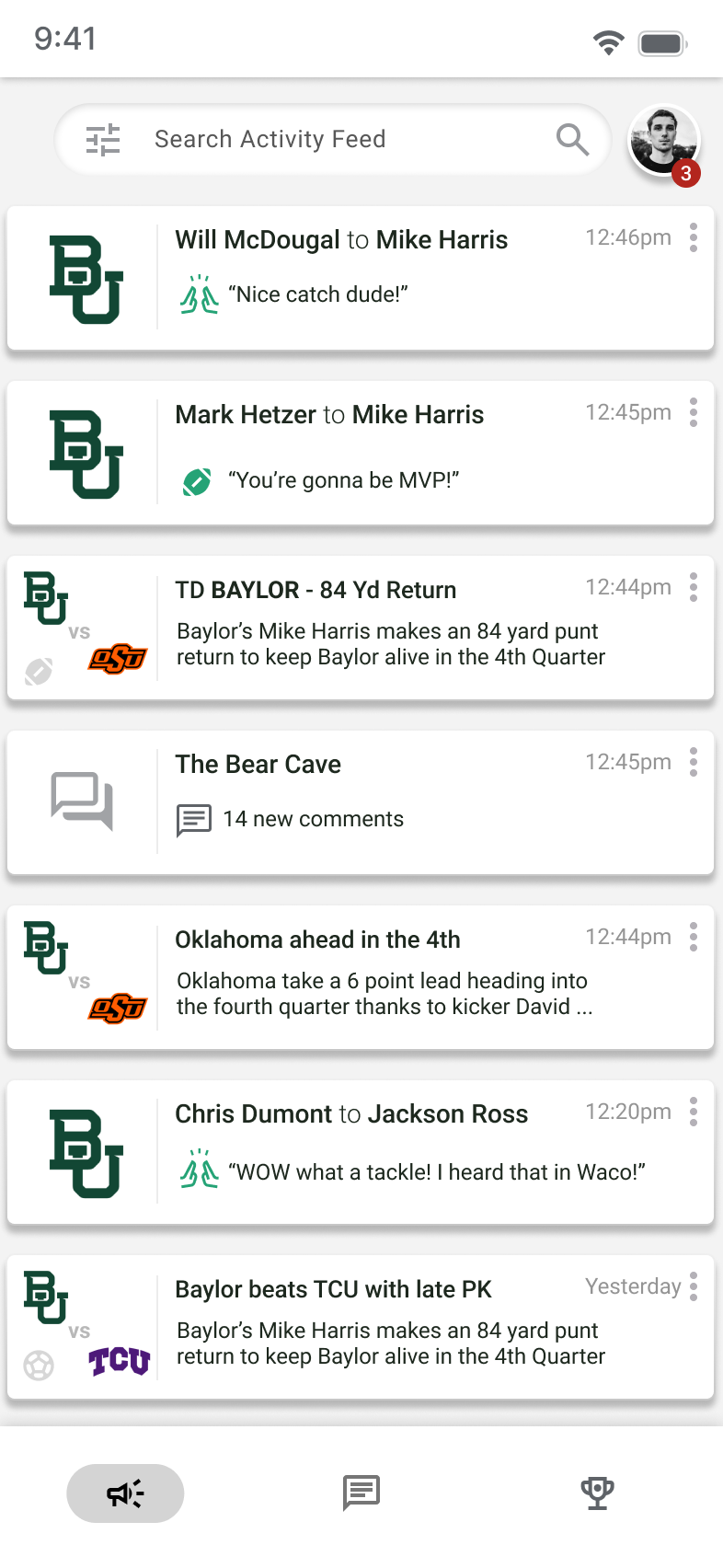
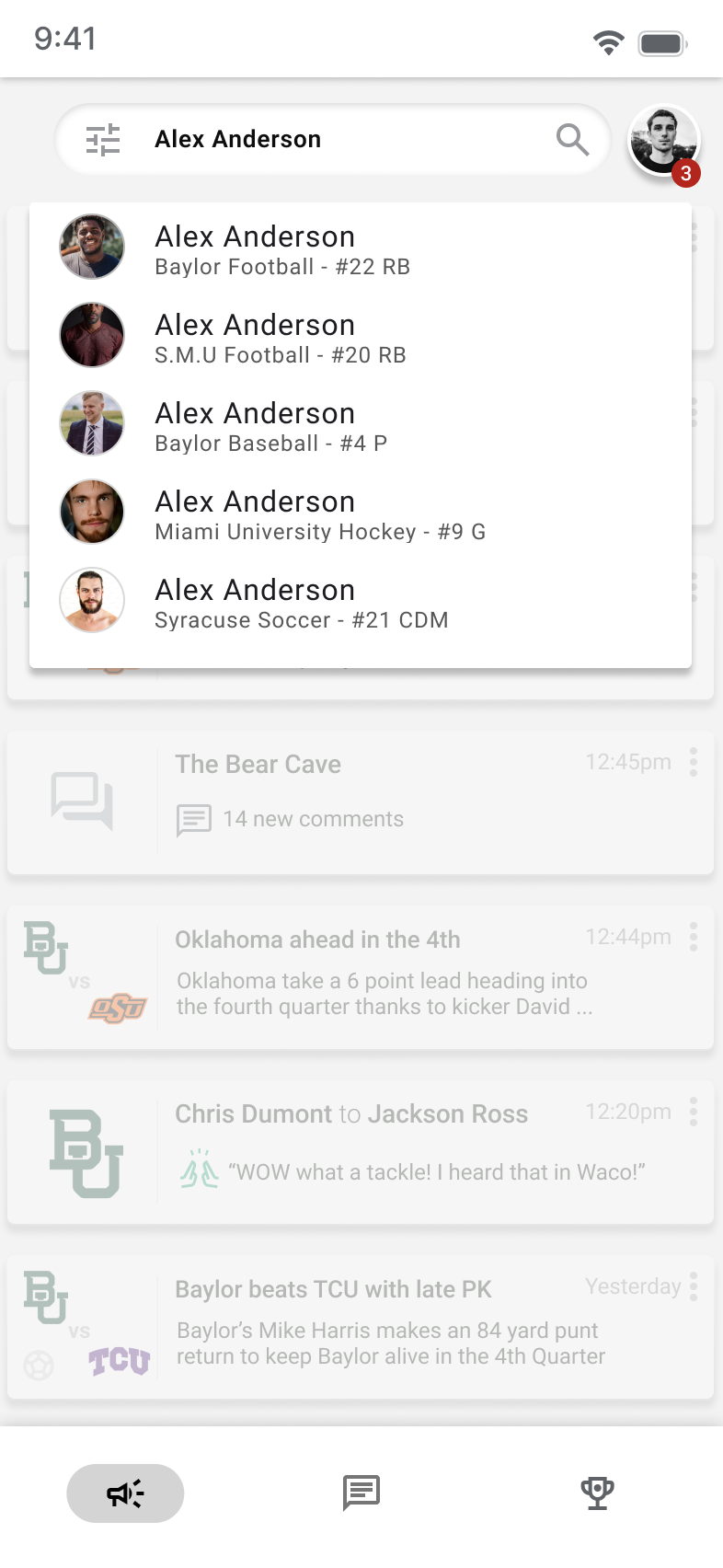
Design a full social layer, friends, following specific teams, schools, and players, plus an activity feed that shows what the community is celebrating in real time.
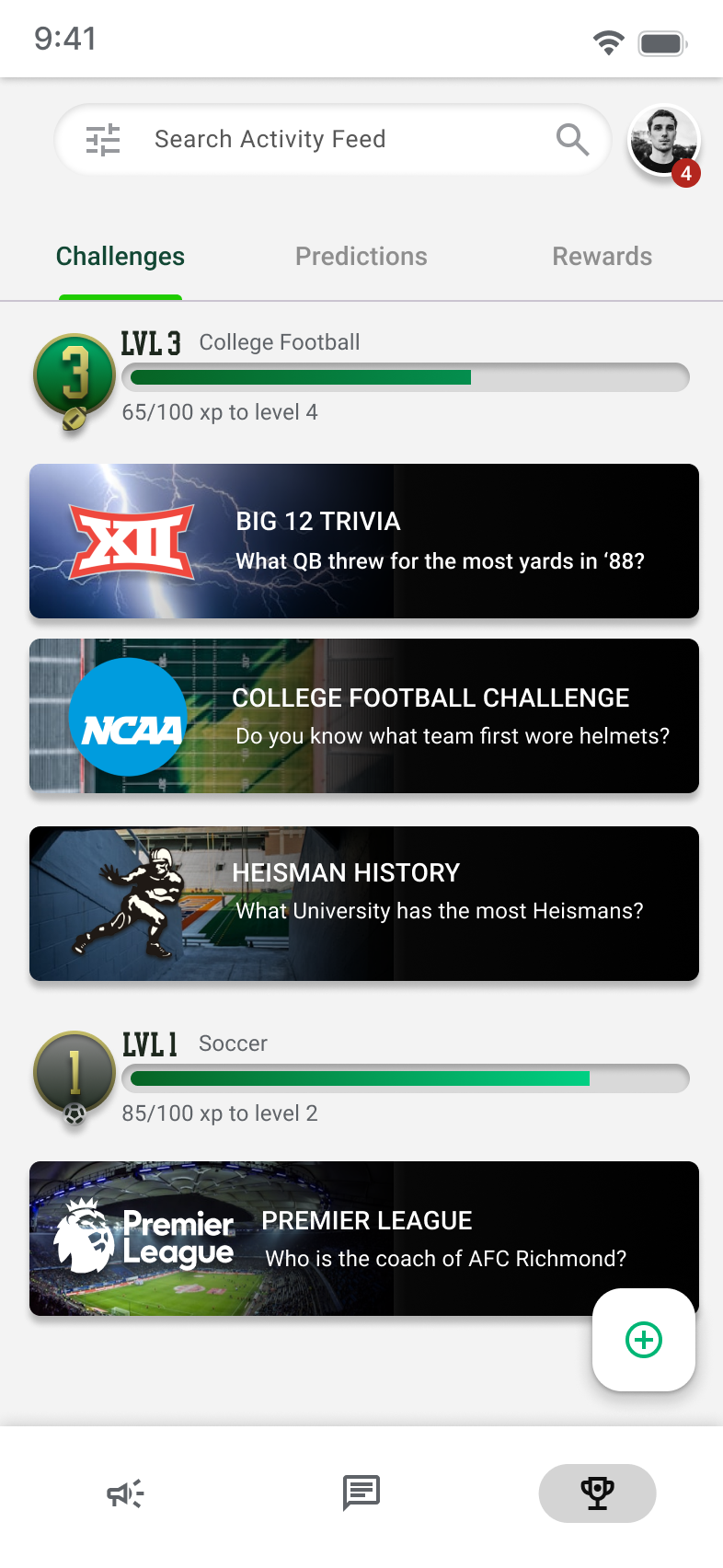
Build an achievement system and sports trivia contests to drive daily habits and keep users engaged during the off-season, not just on game days.
Mike's chief concern: the platform must not become a vector for gambling, compulsive spending, or the exploitation of athletes. Safeguards had to be designed in, not bolted on.
The underlying thesis, escrow-held funds released upon graduation, needed to be clearly communicated and central to the product's identity and value proposition.
My scope spanned the full UX design process: stakeholder discovery sessions, competitive analysis, user research and persona development, information architecture, wireframing, interactive prototyping, and high-fidelity visual design in Figma. I also contributed to the ethical framework document used in legal and compliance discussions, translating UX decisions into language regulators could evaluate.
I began with deep-dive sessions with Mike Singletary's team to understand the vision, non-negotiables, and regulatory concerns. Early sessions surfaced a key tension: the team wanted immediate fan-to-athlete payment, but legal counsel flagged compliance risks. This led to the pivotal escrow model, a design constraint that became a competitive differentiator.
I mapped the landscape across four categories: community tipping models (Twitch, YouTube Memberships, Patreon), peer-to-peer payments (Venmo, Cash App, Zelle), sports fan content platforms (House of Highlights, Overtime, Stadium), and engagement mechanics (fantasy sports, sports betting apps, fan loyalty programs). The white space was clear: no platform combined real-time fan emotional response, direct athlete support, and a compliant financial structure.
Through user interviews with college sports fans aged 18–45, three primary personas emerged with distinct motivations and behaviors. Understanding these archetypes drove every key design decision, from the tip amount defaults to the tone of the achievement copy.
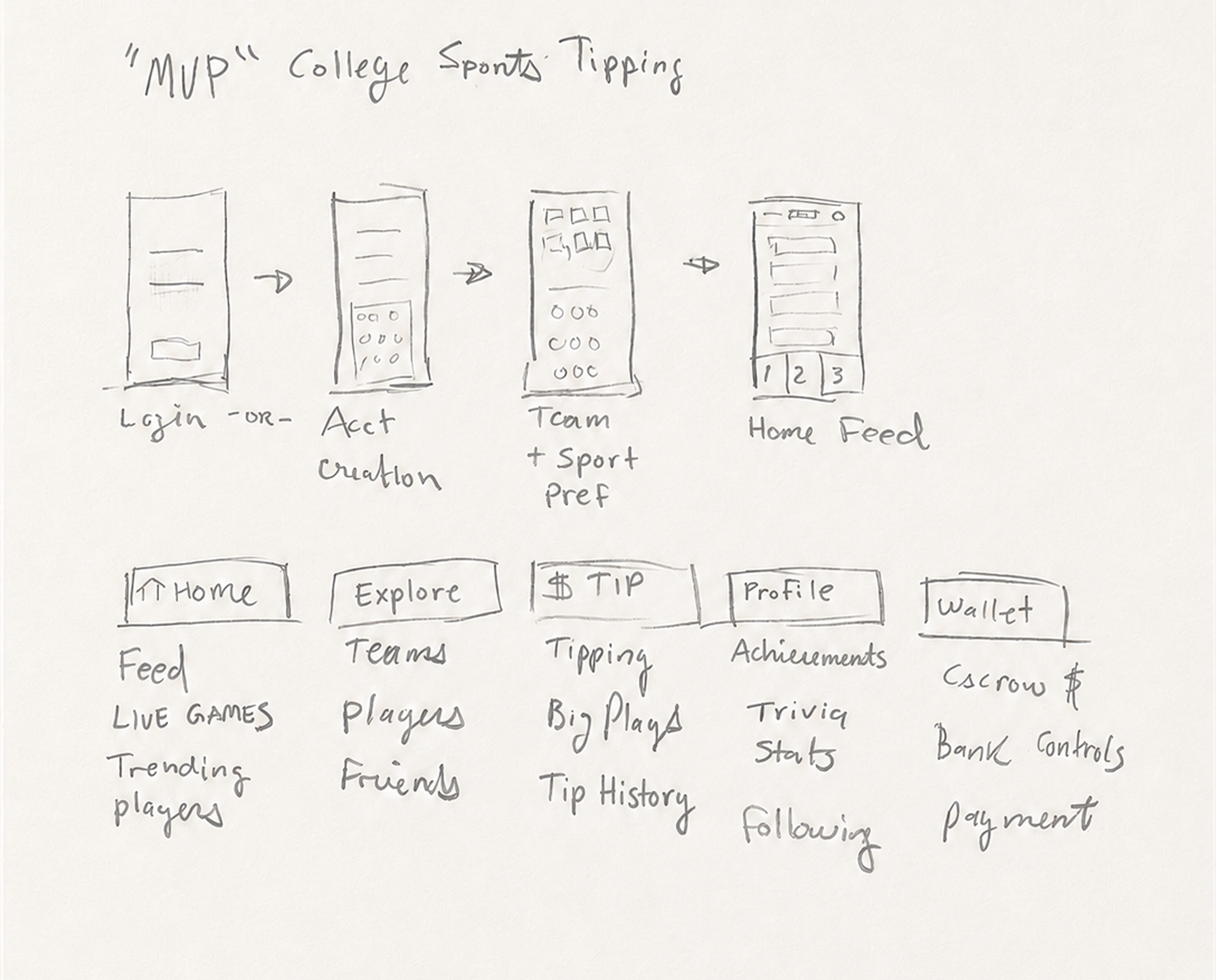
The core navigation was architected around five primary areas: a personalized Home feed, an Explore section for discovering teams and players, the Tipping experience (live and post-game), a Profile with Achievement tracking, and a Wallet for escrow transparency. Secondary flows, trivia, friends, settings, parental controls, nested beneath these anchors.
I used low-fidelity wireframes to stress-test the tipping flow, focusing on the moment of emotional peak (a great play) and reducing friction to near zero. The insight: the "tip window" needed to feel as immediate as a reaction emoji, not a payment form. Iterations also revealed that the escrow transparency screen needed to be accessible from multiple entry points, not buried in settings.
The visual language was built around collegiate tradition and modern digital culture. A deep forest green primary palette communicated prestige and grounding. Gold and amber accents marked premium moments, achievements, and calls to action. Clean white typography ensured readability in varying light conditions. The result is a design system that feels simultaneously rooted in college sports history and native to mobile.
Follows specific teams obsessively. Watches every game. Wants to feel like an active participant, not just a viewer, and craves insider access. Already tips on Twitch. Highly likely to tip on great plays.
Watches when it's on, motivated by social vibes. Attracted by the activity feed, trivia, and achievement gamification. May never tip but creates the community energy that pulls others in. Gateway user for long-term retention.
Deep emotional connection to their school. Motivated by giving back to "the program." The escrow model resonates strongly, they want to support athletes' futures, not just their stats. Highest avg. tip amount.
Tipping tied to verified past plays. Frictionless, celebratory, never predictive.
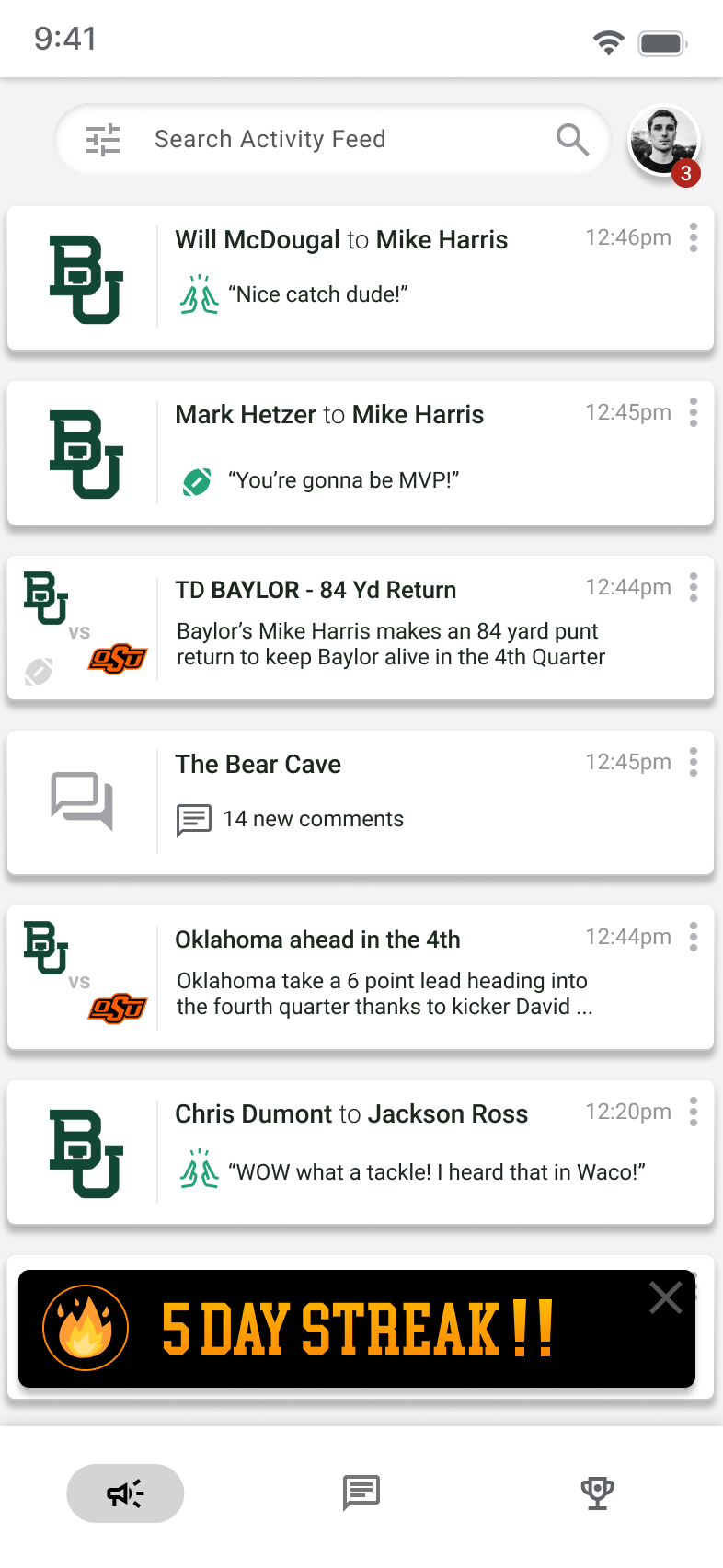
Twitch-style real-time community feed. Reactions, tips, and moments surfaced as they happen.
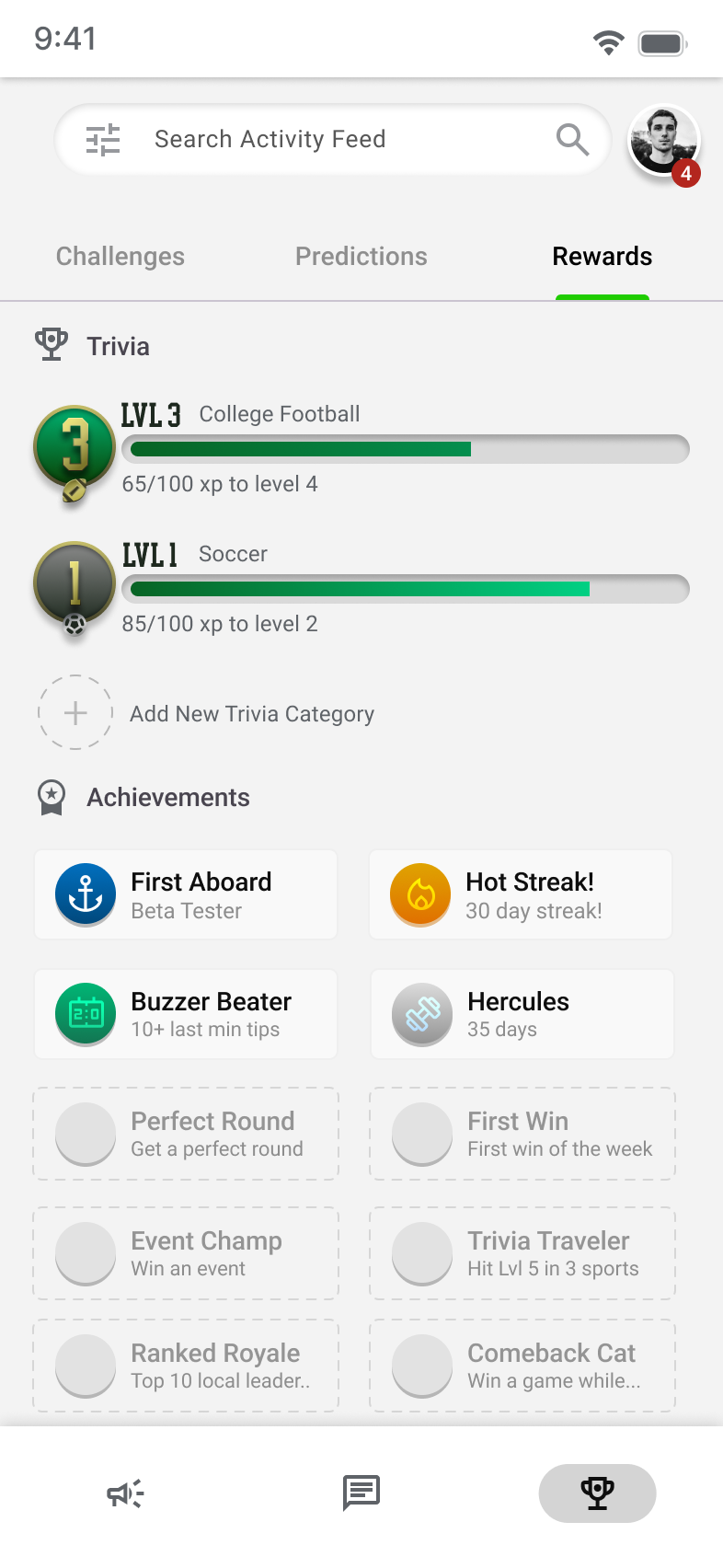
Badges, milestones, and streaks for tipping, trivia, and game watching. Drives off-season habits.
Daily challenges with no monetary barrier. Creates a habit loop for casual users.
Follow teams, schools, individual athletes, or friends. Fully personalized feed.
Users see exactly where tips go, how funds are held, and the timeline to athlete graduation.
The engagement layer was also the growth layer. Daily trivia challenges, achievement badges, and streaks gave casual fans a reason to open the app on days they'd never tip, and trivia results could be shared to social media, turning every "Big 12 Trivia" bragging-rights moment into an invitation for the next fan to join.
Mike Singletary's chief concern throughout the project was that MVP could be misused, as a vector for sports gambling, compulsive spending, or the exploitation of athlete images. Rather than treating these as legal footnotes, I embedded anti-exploitation principles directly into the UX architecture. The goal was a product that could not easily be misread as a gambling platform, even by regulators looking for reasons to restrict it.
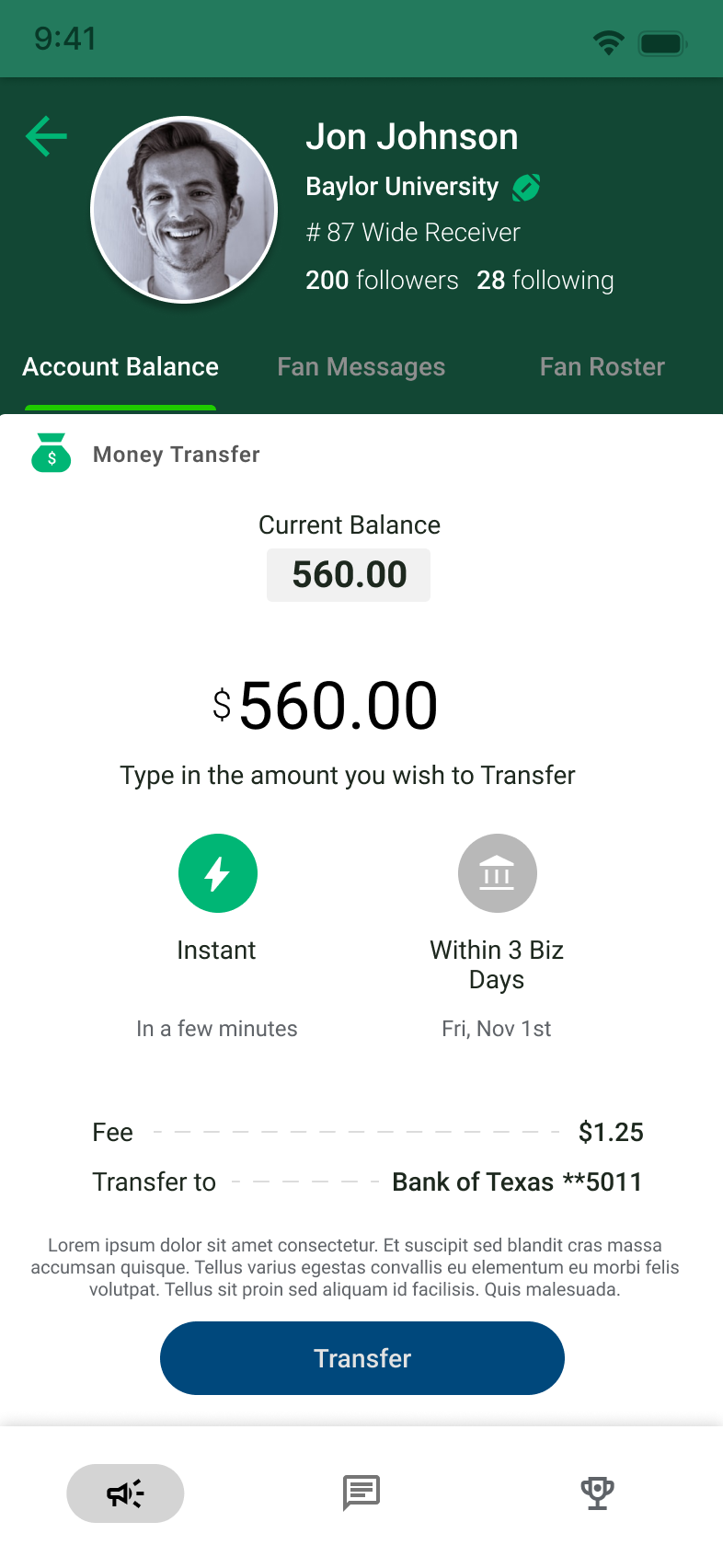
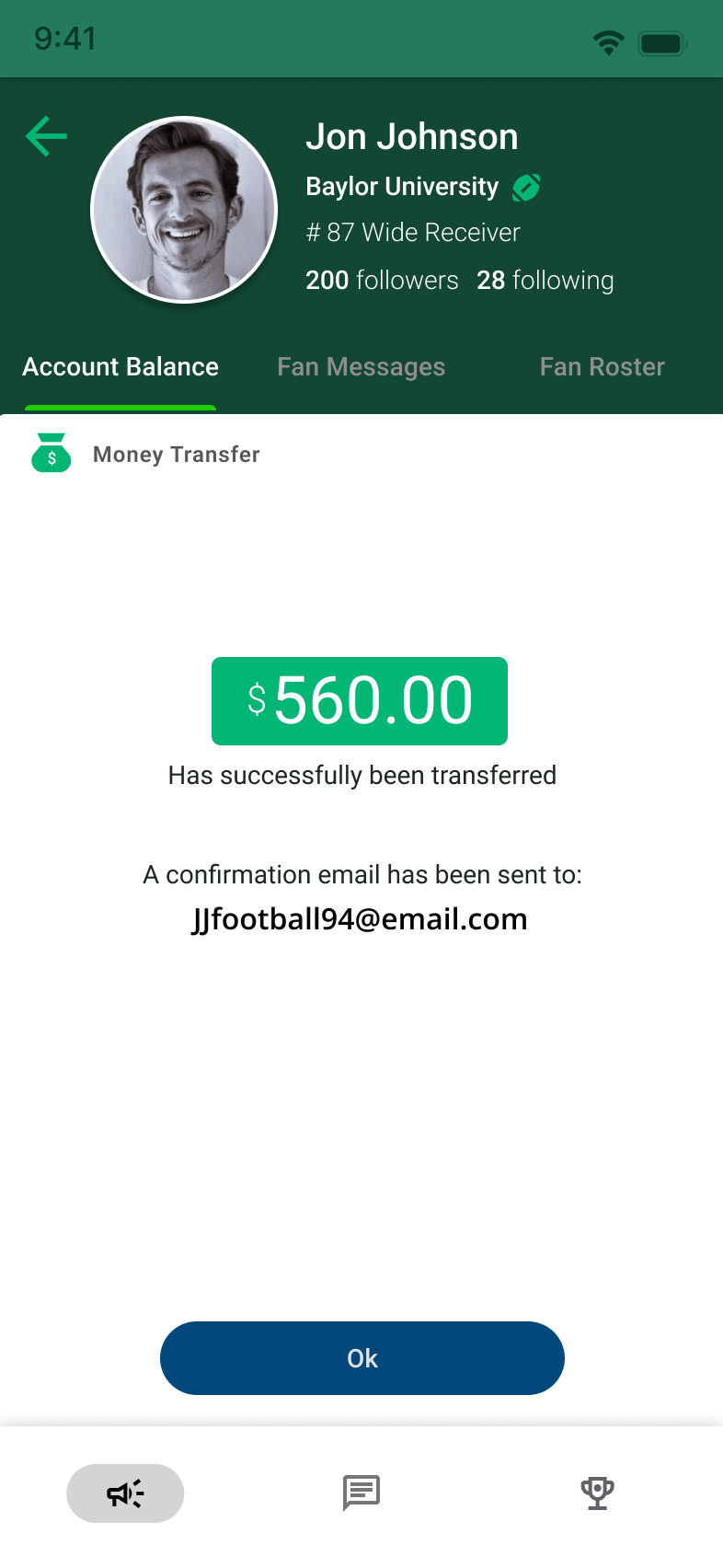
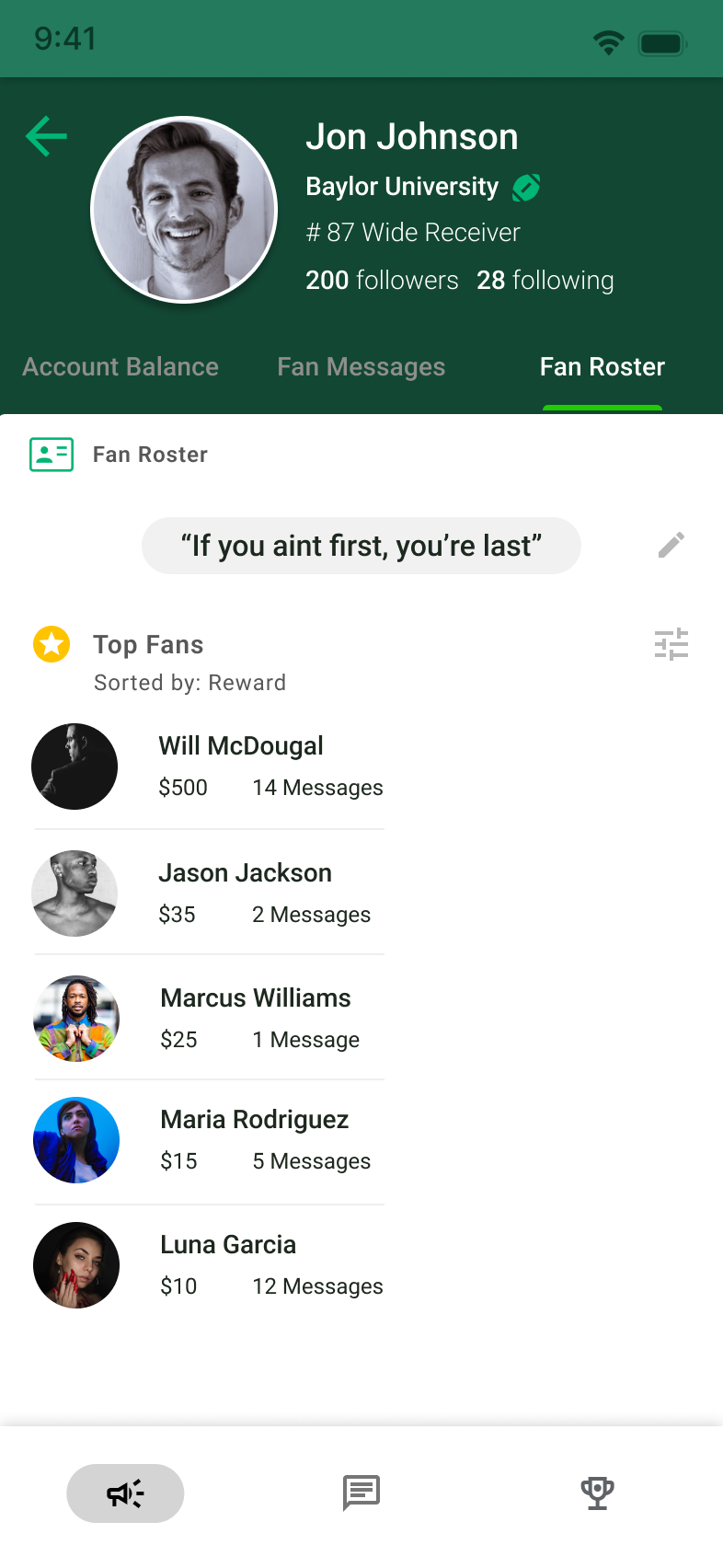
The same framework shaped the athlete side of the platform. Players got a dedicated view to engage their fans and control their own finances: a fan roster showing who supports them and what they've said, and a transfer flow that moves earned funds to their own bank, on their terms, once released from escrow.
Users can only tip on verified, completed in-game moments — a touchdown already scored, a pass already caught. No predictive tipping, no futures. This single rule eliminates the core mechanism of sports gambling from the platform.
The app surfaces zero analytical or predictive content that could be used to inform bets. Stats shown are purely historical and celebratory in framing, never comparative or directional.
The Wallet screen shows cumulative weekly and monthly spend with clear, calm nudges when thresholds are approached. Hard limits can be set by the user. Parental controls allow limits to be set by account administrators.
Funds are held in an escrow account tied to the athlete's graduation date, not paid out immediately. This structure insulates the platform from direct N.I.L. payment compliance risk and makes the athlete welfare mission tangible and credible.
Copy never uses transactional language ("send money," "payment," "bet"). Every tip interaction uses celebration framing: "Tip this play," "Show your appreciation," "Back this moment." The emotional register is fan pride, not investment.
Trivia contests, the activity feed, achievements, and following all exist completely outside the tipping economy. Users can engage deeply with the platform without ever spending a dollar, reducing pressure and ensuring the non-gambling use case is primary.
The engagement with MVP produced a full-spectrum design delivery, from the foundational design system to a comprehensive Figma prototype covering every primary user flow across onboarding, tipping, social, and wallet experiences.
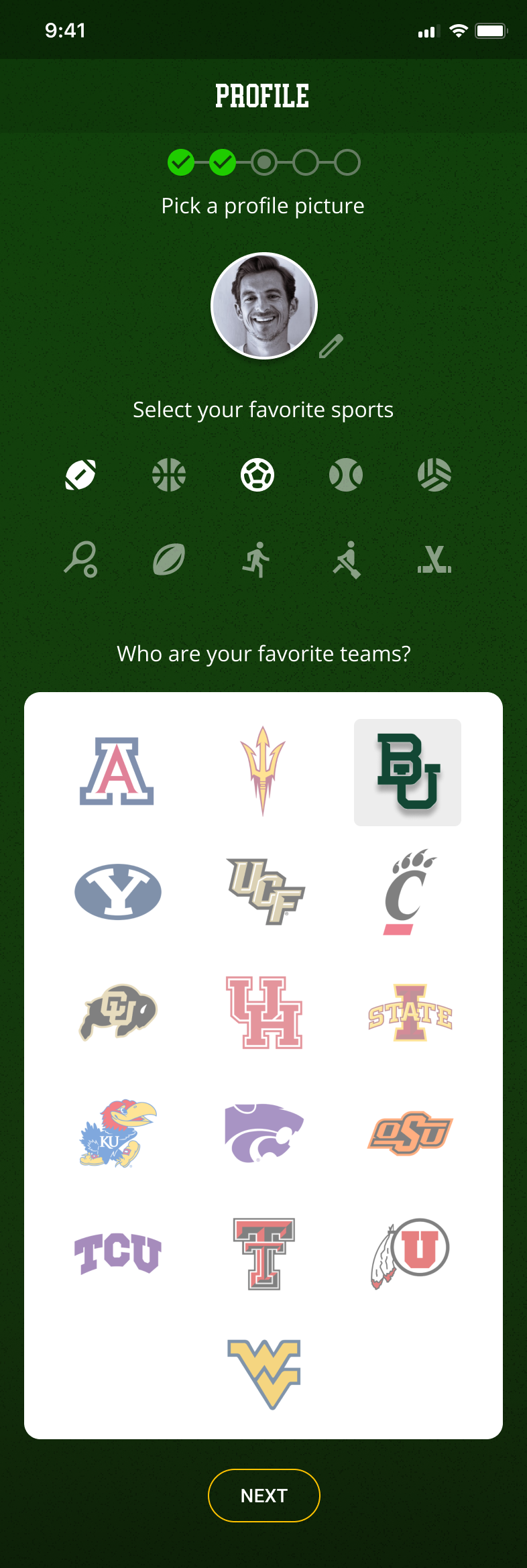
Screens delivered include: onboarding and personalization (team/school/player selection), the live game tipping experience, the activity feed with real-time social interactions, the achievement and badge system, sports trivia contest flow, athlete profile pages, the wallet and escrow transparency view, spending controls and parental settings, and push notification templates.
The MVP design is currently in stakeholder review as the team continues to navigate the evolving N.I.L. regulatory landscape, particularly state-level variations in allowable fan-to-athlete payment structures. The ethical UX framework developed during the project has become a key artifact in ongoing legal and compliance conversations.
Full interactive prototype covering all 40+ screens, with annotated flows, component library, and design tokens. Available for review in a portfolio presentation context.
MVP was one of the most genuinely complex design problems I've encountered, not because the UI was difficult, but because the product existed at the intersection of law, ethics, sports culture, and financial behavior. Here's what I carry forward from it.
The escrow model felt like a limitation at first, delayed gratification for fans, delayed payouts for athletes. But it became the most compelling differentiator: a platform that genuinely prioritizes athlete welfare over instant gratification is a fundamentally different product from every other app in this space. The "constraint" became the mission.
It would have been easy to slap a "not gambling" disclaimer on the app and call it done. Instead, every core structural decision — tips tied to past plays, no odds displayed, escrow hold, free engagement layer — was engineered to make exploitation architecturally difficult. That's the difference between compliance as a checkbox and ethics as a design principle.
The patchwork of state N.I.L. laws meant the platform might behave differently for users in different states. Designing for that uncertainty, without creating a confusing or fragmented experience, required me to think carefully about how to communicate limitations with clarity and grace, not legal boilerplate.
Everything else — the feed, the trivia, the achievements — serves one moment: the fan watching a great play, feeling something, and having a way to act on it. Every design decision was evaluated against whether it accelerated or impeded that moment. When the core experience is an emotion, your job is to protect it.